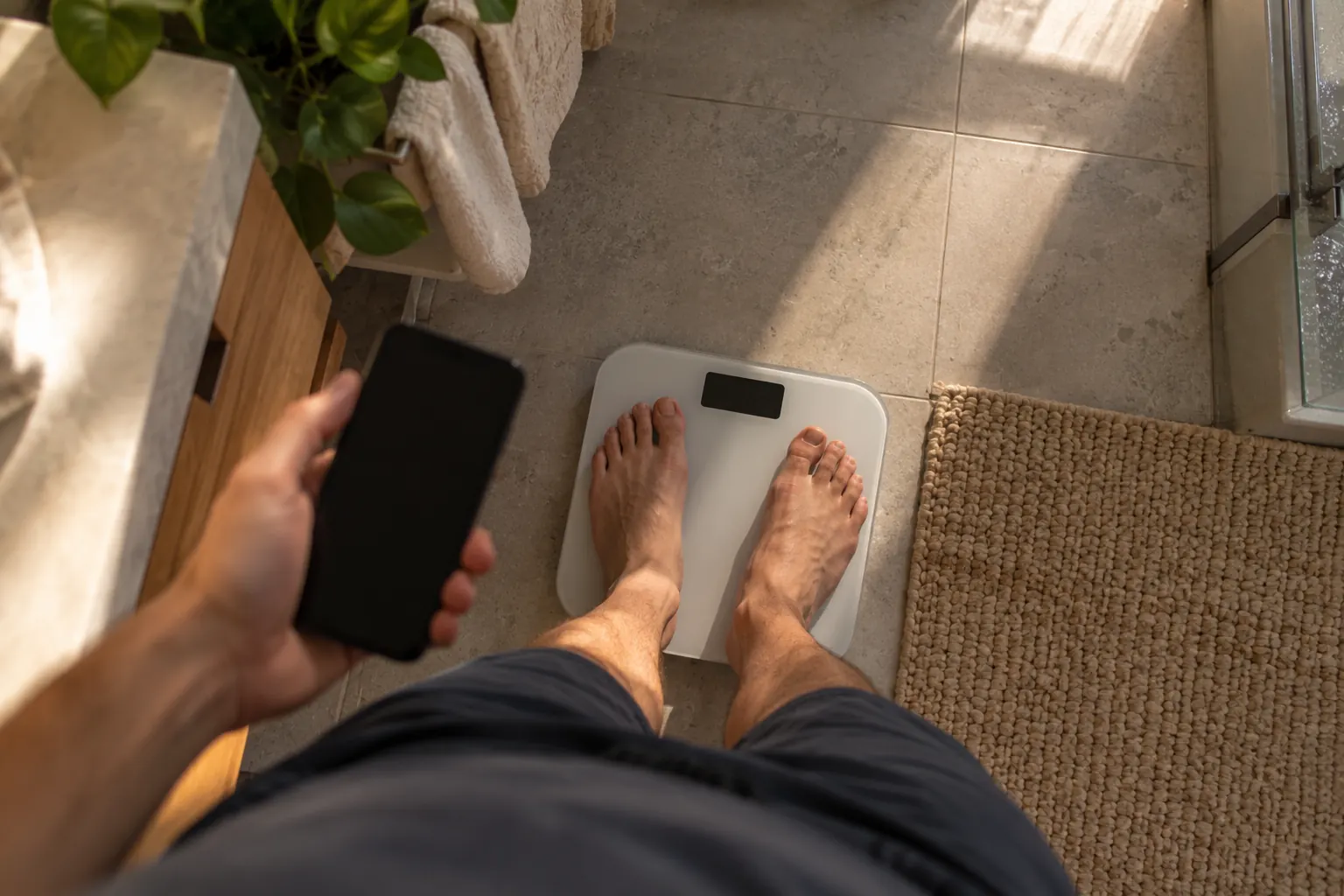
Everyone starts tracking the same way. You download a new app in a burst of motivation and log five metrics before breakfast on day one.
By week two the entries thin out. By week four the habit is gone, and the data you did collect tells you nothing, because four weeks of patchy logging is not enough to show a trend.
The problem is almost never discipline. It is design. Most people build a tracking routine that only works on their most motivated days, then blame themselves when an ordinary Tuesday kills it. This guide is about building the opposite: a routine so small and so anchored to your existing day that quitting takes more effort than continuing.
Why tracking habits fail
Several separate habits usually get bundled into one. Measuring is one action and logging is another, and reviewing your results is a third with a completely different cost. When you try to do all of them daily, the heaviest one drags the rest down.
There is also the perfectionism trap. Miss one day and the streak is broken. The chart has a gap. For a lot of people that gap feels like failure, so they stop looking at the chart, and then they stop logging at all.
The fix for both is the same: shrink the habit until it survives your worst day, not just your best one.
Step 1: Track one thing, not five
Pick the single number that matters most for your current goal. Cutting weight? Track bodyweight. Building strength? Track your main lift. That is it for the first month.
This feels too easy, which is exactly the point. A habit forms through repetition, and repetition only happens when the action is light enough to repeat on a stressful day, or on a morning when you would rather not know the number.
Once the first metric is automatic, adding a second costs almost nothing. Adding five on day one costs you the whole habit.
Step 2: Anchor it to something you already do
A tracking habit that floats freely in your day will lose to whatever else is happening. A habit attached to an existing routine does not need to be remembered at all.
The classic anchor for bodyweight is the morning bathroom visit: wake up, use the toilet, step on the scale, log it. Same time, same conditions, so the data stays comparable. For workout tracking, the anchor is the workout itself. You log the set during the rest period, not "later tonight," because later tonight does not exist.
Write the anchor down as a sentence: "After I brush my teeth, I weigh in and log it." If you cannot phrase it that way, you do not have an anchor yet. You have an intention.
Step 3: Get each entry under 30 seconds
Time yourself once. Open the app or the notebook and enter the number. If that takes more than 30 seconds, the habit has a leak, and leaks compound daily.
Common leaks are easy to find. Maybe your log asks for ten fields when you only care about one. Maybe your spreadsheet needs a laptop, so numbers from the gym sit in your head until they evaporate.
Cut every field that is not your one metric. If your tool will not let you, change tools. This sounds drastic, but a tracking system you avoid opening is worth exactly nothing.
Step 4: Let the tool do the remembering
Here is the failure mode nobody warns you about: you stay consistent for months, and the record still ends up useless because the pieces do not connect. You scroll through old progress photos wondering what you weighed in each one. The answer is in a different app, on a different timeline, and matching them up by date is miserable.
So pick tools that connect the dots for you. This is the exact problem Trackr was built around: every progress photo you take gets tagged with your current weight automatically, so the before and after record builds itself while you just show up.
Whatever tool you use, the principle holds. Anything the system can remember for you, it should. Your job is the 30 second entry. The tool's job is everything after.
Step 5: Review weekly, not daily
Daily numbers are noisy. Bodyweight swings a kilo or more with water and food timing, and staring at that noise every morning is how people convince themselves nothing is working.
Log daily, judge weekly. Pick one day, Sunday works, and look at the seven day picture instead of any single reading. Weekly averages smooth out the noise and show the actual direction. This one change protects more tracking habits than any motivational trick, because it separates the act of logging from the emotion of the result.
What to do when you break the streak
You will miss a day. The habit does not die when you miss one. It dies when missing one turns into missing a week, because the gap starts to feel like a verdict.
Use the two day rule: never miss twice in a row. One missed day is a data point. Two is the start of a new habit, the habit of not tracking.
And when you come back, do not backfill. Do not estimate what you weighed on the days you missed. Just log today. A record with honest gaps beats a record padded with guesses, and the fastest way back into rhythm is the next real entry, not an accounting exercise about the ones you skipped.
The 30 day version of this plan
Put simply, here is the whole system:
- Week 1: one metric tied to one anchor, with entries under 30 seconds.
- Week 2: same, plus set your weekly review day.
- Week 3: expect a missed day. Apply the two day rule and move on.
- Week 4: review the month. If the habit held, add a second metric. If it wobbled, shrink it again instead of pushing harder.
Thirty days of one boring number beats ninety days of ambitious plans you abandoned. The boring number compounds.
FAQ
How long does it take to build a tracking habit?
Research on habit formation puts the range anywhere from three weeks to several months, and the honest answer is that it depends on how small the habit is. A 20 second weight entry anchored to your morning routine can feel automatic within a month. A 10 minute logging session rarely becomes automatic at all.
Should I track every day or is a few times a week enough?
For bodyweight, daily entries reviewed weekly give you the cleanest trend, because averages need data points. For workouts, track every session you do, whether that is twice a week or five times. The rule is to match tracking frequency to the thing itself, then judge the results on a weekly rhythm either way.
What should I do after missing a whole week?
Log today and say nothing to yourself about the gap. Do not backfill, and do not add extra metrics to compensate. If a whole week slipped, the habit was probably too big, so shrink it: fewer fields and a stronger anchor.
If you want a tracker that handles the remembering for you, with progress photos that tag themselves with your weight, Trackr is on the App Store and Google Play. Start with one metric. The rest can wait.